
Why This Comparison Matters for Wholesale Buyers
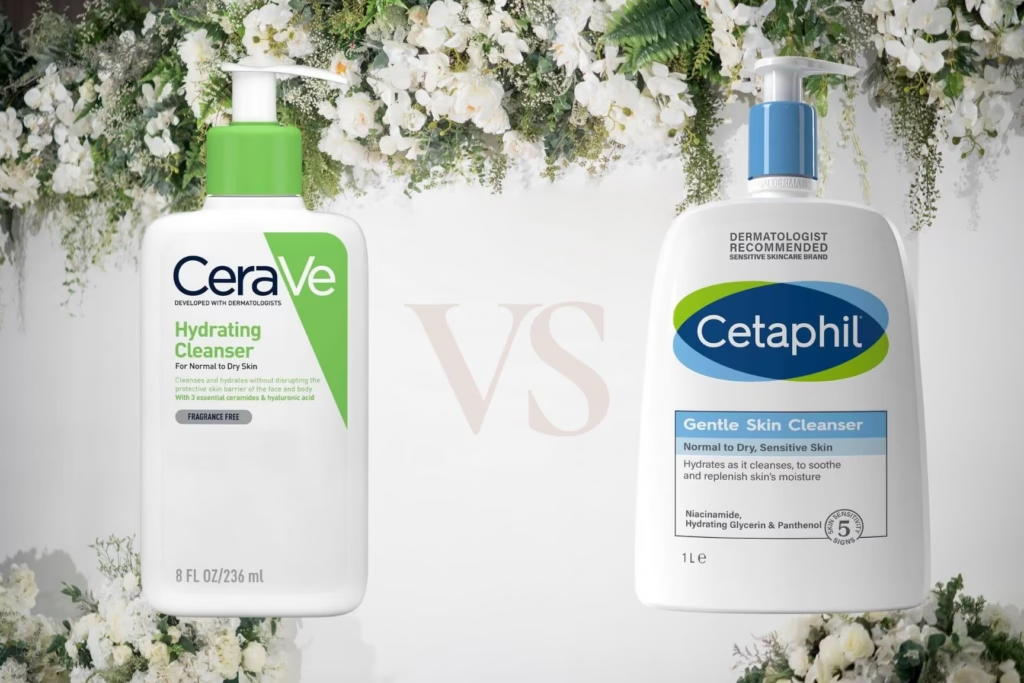
In pharmacy skincare wholesale, no buying decision comes up more frequently than this one: Cetaphil or CeraVe? Both brands are dermatologist-recommended, both target sensitive and compromised skin, both command strong pharmacy shelf placement globally, and both enjoy loyal consumer bases that return reliably for the same products. The differences between them, however, are significant — and understanding those differences is the foundation of building a wholesale skincare range that maximises ROI for your specific business.
This guide makes no universal declaration of a winner. Instead, it provides the analytical framework to determine which brand — or what combination of both — delivers the best return on your specific wholesale investment, given your market, channel, and customer profile.
Brand Background: Two Different Paths to the Same Category
CeraVe: Scientific Innovation at an Accessible Price
CeraVe was developed in collaboration with dermatologists and launched in 2005 with a specific technological proposition: restoring and maintaining the skin’s natural ceramide barrier. The patented Multivesicular Emulsion technology (MVE) delivers ceramides in a controlled-release format designed to work throughout the day. Acquired by L’Oréal Group in 2017, CeraVe now benefits from one of the world’s most sophisticated beauty supply chains while maintaining its science-first brand identity.
CeraVe’s growth trajectory over the past decade has been exceptional. TikTok’s skincare community, dermatologists on social media, and a general consumer shift toward science-backed “skinimalism” have collectively driven CeraVe’s global brand awareness to a level that few pharmacy skincare brands have ever achieved.
Cetaphil: 75 Years of Dermatological Trust
Cetaphil was developed by a pharmacist in 1947 and has built its reputation over 75 years of consistent dermatologist recommendations. Owned by Galderma, a company whose entire focus is dermatology, Cetaphil has a clinical heritage that many newer brands cannot match. In some markets, particularly South Asia, Southeast Asia, and parts of Sub-Saharan Africa, Cetaphil retains stronger market penetration than CeraVe due to earlier distribution and sustained dermatologist advocacy.
Cetaphil’s brand identity is defined by simplicity and trust. It does not innovate aggressively, it does not chase trends, and it does not need to. Its formulations are consistently gentle, effective, and suitable for the most sensitive skin, which is precisely why dermatologists have recommended it without hesitation for three-quarters of a century.
Product Range Comparison: Breadth and Depth
CeraVe Range Breadth
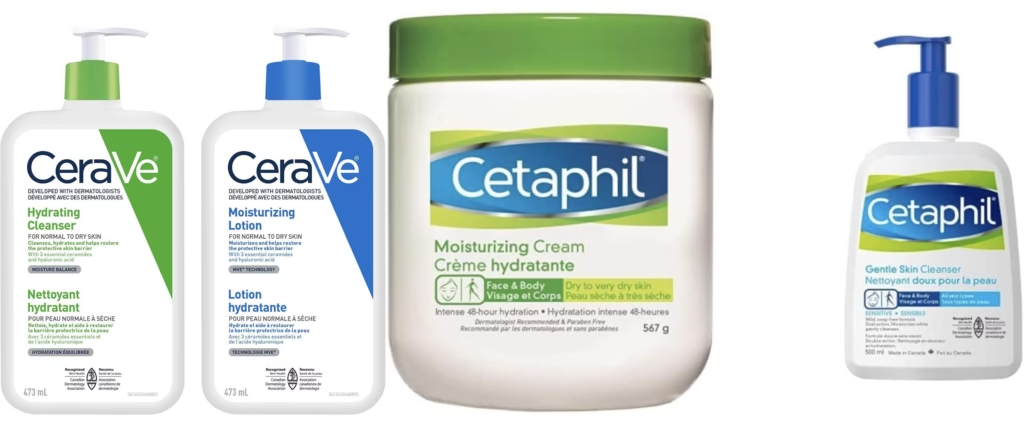
CeraVe has a significantly broader product range than Cetaphil. Beyond its core moisturisers and cleansers, CeraVe offers SPF-integrated moisturisers, salicylic acid treatments, hyaluronic acid serums, body wash, baby care, eye cream, and a growing speciality range addressing specific skin concerns, including acne, rosacea, and barrier disruption. This breadth creates stronger upsell and cross-sell opportunities for retailers.
Cetaphil Range Focus
Cetaphil’s range is more focused: cleansers, moisturisers, and targeted treatments for eczema and psoriasis-related dryness. The Cetaphil Moisturising Cream, Gentle Skin Cleanser, and Rich Hydrating Night Cream cover the essential bases. The Baby Cetaphil range is a particular strength — it is one of the most widely recommended baby skincare products in the world and creates strong maternal loyalty that frequently extends to adult product adoption.
Demand and Search Volume: The Market Evidence
Global Search Demand
On a global basis, CeraVe outperforms Cetaphil significantly in organic search volume. CeraVe Moisturising Cream, CeraVe Hydrating Cleanser, and CeraVe Foaming Facial Cleanser are among the most searched skincare products globally across Google, Amazon, and social commerce platforms. This is driven primarily by CeraVe’s stronger social media presence and endorsement from dermatologist influencers and content creators.
Market-Specific Patterns
Cetaphil leads in specific markets. In India, it has been the dominant dermatologist-recommended moisturiser for decades and maintains a market share that CeraVe is only beginning to challenge. In some Southeast Asian and African markets, Cetaphil’s longer distribution history gives it a head start. Buyers targeting these specific markets should weigh Cetaphil more heavily in their initial range.
Margin and MOQ Comparison
Both brands are available from Cosmetics Suppliers World at competitive wholesale pricing. CeraVe typically commands a slightly higher retail price in most markets — the result of its stronger premium positioning and higher brand awareness. This translates to marginally higher per-unit gross margin on CeraVe for most retailers. Cetaphil’s more accessible price point drives higher trial volume among price-sensitive consumers.
MOQs for both brands are flexible through Cosmetics Suppliers World — significantly lower than direct brand purchasing. Contact our team to receive comparative pricing for both brands across your specific required SKUs.
The Verdict: Which Should You Stock?
If Your Primary Channel Is Global E-Commerce or Amazon
Stock CeraVe as your primary skincare brand. Its search volume dominance, stronger social media community, and higher global brand awareness drive e-commerce conversion with minimal advertising investment.
If Your Market Is South Asia, Southeast Asia, or Sub-Saharan Africa
Stock Cetaphil as your primary brand, supplemented by CeraVe as a secondary option. Cetaphil’s established dermatologist relationships and longer distribution history in these markets create a stronger pull than CeraVe’s more recently established presence.
If You Operate a Pharmacy or Clinic
Stock both. Cetaphil’s prescription-adjacent credibility and baby range complement CeraVe’s ceramide technology narrative. Cross-merchandising both brands gives you a comprehensive answer to every sensitive skin question a consumer or patient brings to your counter.
The Best Answer: Stock Both and Cross-Merchandise
For most retailers with sufficient space and working capital, the strongest approach is to stock both brands and position them as complementary rather than competing. CeraVe for barrier repair and ceramide technology. Cetaphil for gentle, minimal-ingredient simplicity. Together, they cover every sensitive skin consumer who walks through your door.
Frequently Asked Questions
Which is better for eczema — CeraVe or Cetaphil?
Both are appropriate for eczema. CeraVe’s ceramide technology directly addresses the ceramide deficiency that characterises atopic eczema. Cetaphil’s Restoraderm range is specifically formulated for eczema management. In practice, dermatologists recommend both — often starting with whichever the patient has prior experience with to ensure compliance.
Can I order both Cetaphil and CeraVe from one wholesale supplier?
Yes. Cosmetics Suppliers World supplies both brands in consolidated shipments with split invoicing by brand. Contact our team to receive comparative pricing across your required SKU list.
